
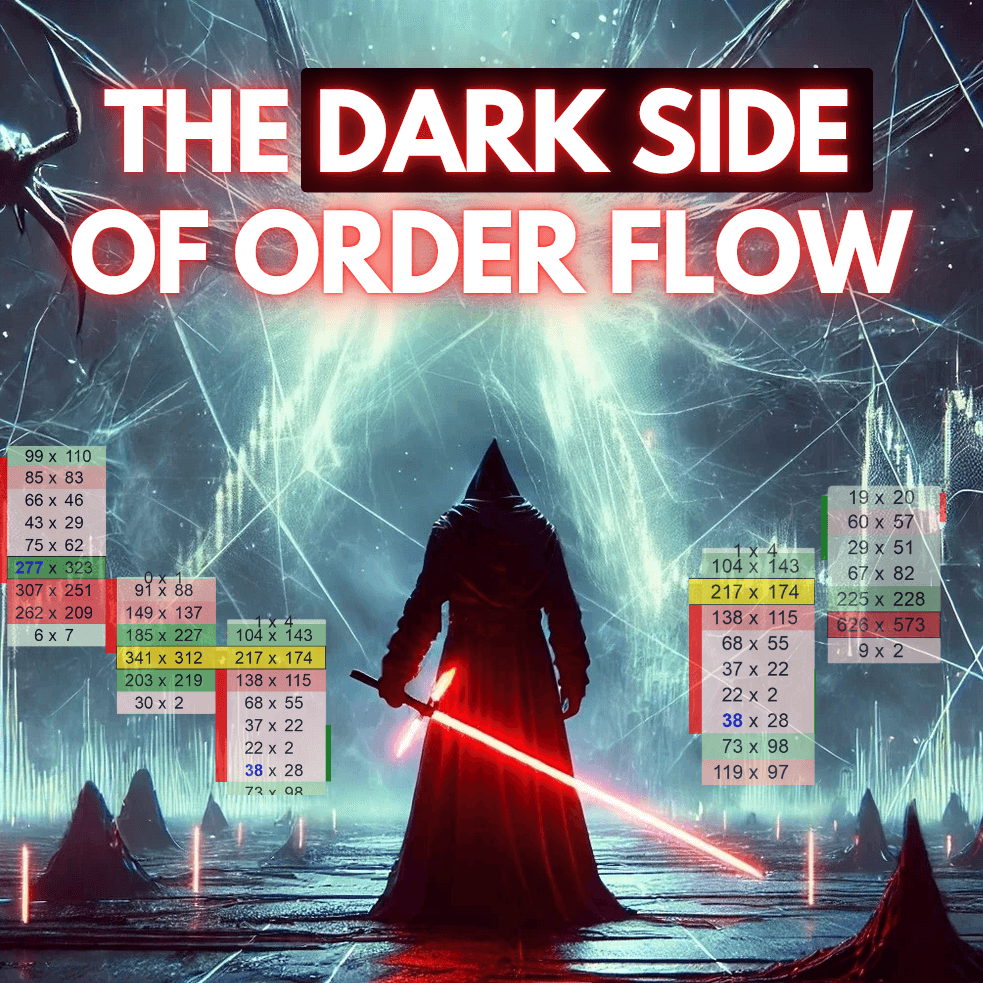
Video Transcript:
Hey everyone, it’s Dale here. In this
video, I’d like to talk about six uncomfortable truths about order flow trading
that I think everyone who is about to start with order flow trading should
know. So, let’s cut to the chase and start with the first one: Order flow is
not ideal for beginners. What brokers and order flow gurus often tell you
is that order flow will transform your trading. They claim it will allow you to
decode the market and see the intentions of big trading institutions as if
you’re reading an open book. The truth, however, is that it won’t be like
that—at least not if you’re a beginner. Without experience, order flow is
likely to leave you overwhelmed by the sheer amount of data and complexity on
your screen. It’s like trying to read an advanced scientific paper without
understanding the basics; it will just be confusing and unproductive. Don’t get
me wrong—order flow is a great tool, but it’s best used when you already
understand the market and know what to look for. It’s not a magic shortcut but
an advanced technique that requires a solid foundation.
Now, the second uncomfortable truth is
about bid and ask. Everyone will tell you that the bid side (the left
side of the footprint) represents sellers, and the ask side (the right side)
represents buyers. This simplification often leads beginners to think order
flow trading is easy, but it’s not. This is only half the truth. In reality,
the bid side doesn’t just include aggressive sellers but also passive buyers,
while the ask side doesn’t just include aggressive buyers but also passive
sellers. This duality makes reading order flow footprints far more difficult
than people often claim. Those selling order flow software typically leave out
this detail to make order flow seem like a Holy Grail. However, understanding
the full context of the market is essential. For instance, there are ways to
determine whether there are buyers or sellers on the bid or ask, but it
requires reading the market’s overall context—not just focusing on specific
footprints. This is why order flow is best suited for experienced traders. If
you want to learn order flow trading, you absolutely can—my order flow course
available on my website teaches this in detail. It takes time, but it will take
you further than those who only believe the oversimplified bid-and-ask
narrative.
The third uncomfortable truth is that order
flow works best in centralized markets. Centralized markets, like futures,
indexes, or stocks, trade all instruments in one central location, and order
flow provides data from that single source. This means you get a complete
picture of all market participants’ transactions. On the other hand,
decentralized markets, like Forex, operate across multiple locations. In these
cases, order flow only shows part of the transactions, making it less reliable.
While decentralized markets work well for strategies like Volume Profile, which
focus on the bigger picture, they are not ideal for the detailed insights
required for order flow. If you want to trade currencies with order flow, I
recommend futures markets, such as Euro or Canadian dollar futures, instead of
Forex. Accurate data from centralized markets is crucial for successful order
flow trading.
The fourth uncomfortable truth is that
the numbers in order flow don’t matter as much as you think. Looking at
an order flow chart, you’ll see an overwhelming heap of numbers that might
compel you to dig through them to “decode the matrix.” However, focusing on
every number will only lead to paralysis by analysis. Instead, focus on
specific key elements hidden in the noise, such as heavy volume zones, stacked
imbalances, failed auctions, and deltas. For example, on a footprint chart, I’m
not interested in all the numbers but only in a few critical areas like heavy
volume zones, imbalances, and deltas (positive or negative). This targeted
approach helps identify what the big players are doing without getting lost in
the data. Learning what to look for takes experience, but it’s not about
reading every single number on your screen.
The fifth uncomfortable truth is that order
flow is not ideal as a primary strategy. This may be controversial, but in
my experience, order flow is best used as a secondary tool to complement a
broader strategy like Volume Profile, Price Action, or VWAP. These tools help
you identify strong support and resistance zones, and order flow is then used
to confirm your trade, manage it, and maximize its potential. For example, I
use Volume Profile to identify strong levels on a higher time frame and then
switch to order flow to confirm trades around those levels. Order flow is
powerful but works best when paired with a bigger-picture strategy.
Finally, the sixth uncomfortable truth
is about the costs involved in order flow trading. There’s no avoiding
the expense of quality software and high-quality data. For instance,
TradingView offers order flow as part of its $600-per-year package, but its
order flow features are limited. More professional options include
NinjaTrader’s order flow tools, which cost $1,500 for a lifetime license, or my
order flow software, which is $497 for a lifetime license and includes
additional tools like Volume Profile indicators and a video course.
High-quality data is another cost—CME exchange data, for example, costs about
$140 per month. While the upfront investment can be significant, having
detailed, accurate data is essential for effective order flow trading.
I hope this video hasn’t discouraged you but rather given you a realistic perspective on order flow trading. Knowing these truths will help you make an informed decision before diving in. If you’d like me to guide you further, visit my website, Trader-Dale.com, and check out my order flow pack, which includes educational resources, indicators, and tech support. Thanks for watching, and I’ll see you in the next video. Until then, happy trading!

Hello Dale, I am confused. I use footprint tradingView and in my footprint the ask =sellr -side is on the left and the bid=buyer side right. . Does the fact that the ask =sell-side represents aggressive sellers and passive buyers mean I am correct? I am confused, but What is going on?