
Video Transcript:
Hey guys, it’s Sterling here from Trader Dale.
I wanted to do a quick intro before we got into this video just so you guys know who I am. Hi, again, it’s Sterling. I run Trader Dale with Dale, and I started the site with him in 2017. Primarily, I do back-end stuff, so working with traders behind the scenes. Funded Trader Academy is my primary focus at this point, and I’ll be doing some more videos where you see smart money concepts, as that’s kind of my specialty in trading.
So anyways, you can see a little bit of my trading account as well—or one of the Prop Firm accounts I’ve been using. It’s kind of a test to illustrate for you guys what’s possible, and then we walk through, most importantly, because this is about teaching you how to trade. It doesn’t really matter what I do—I mean, in a way, it does. You want to see what I’m doing and what we’re doing works, but at the end of the day, you want to be making money, and that’s what this video is about: showing you how we frame a trade, starting with looking at the liquidity pool to start the day and then looking for an additional signature to then frame a positive reward-to-risk-based scenario off of.
So I hope you guys like the trade. It was a really nice setup, and most importantly, hopefully, you can use it to kind of begin to frame some ideas in the future and take some better trades. So anyways, on with the trade—let’s get into it.
All right, guys. Kind of doing this one in a bit of a hurry, so the chart isn’t perfect here, but ultimately, looking to get short from this level right here. It has a bit to go, but this green area here—I’ll kind of show you why I’m going to get rid of a couple of other things and clean this up a bit. But ultimately, what we had—and again, let me…
So to begin with, you know, we swept liquidity at the start of the day. So if we just go out to an hourly chart and take a look at that, obviously, that was the Asian highs that we had set through—well, the Asian highs, and then we took out the prior session highs. I think I said prior day highs—obviously prior session highs during the New York session, and that resulted in a rotation back down.
So what I like about that—a couple of things right now—is we’ve been respecting, continuing to respect fair value gaps to the downside, but we had this bullish fair value gap through here. This was during a macro, and it’s not huge, but as you can see, once that level broke, it really was respecting that.
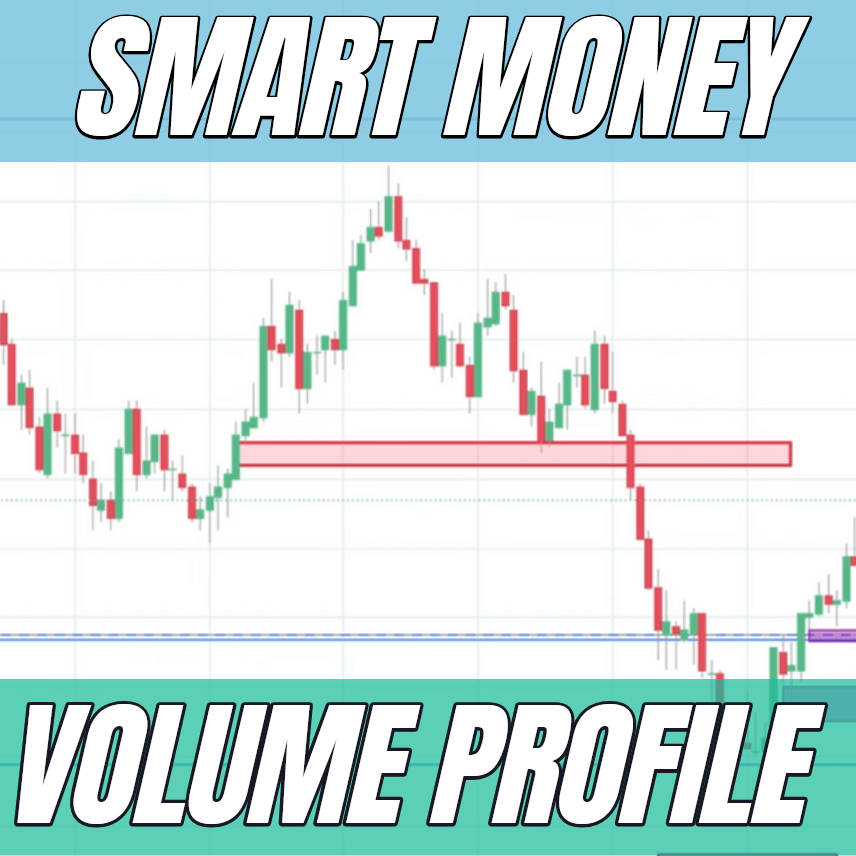
So ultimately, yeah—okay, I am that is—yeah, I’m not looking for much of a much beyond this point here for an entry personally, but anyway, so from here, what I’m looking at is a couple of things. What I liked about this is I like to show the volume profile correlation that we had here, so you have a pretty large volume level just beyond this fair value gap.
And I was talking with somebody in a Funded Trader Academy onboarding call this morning about using volume profile in correlation to smart money concepts. One of the things that I—way that I talked about was how you can use it as, you know, an entry confirmation. You can use it as a stop-loss location, which we’re going to talk about here, or potentially not taking an entry based on a conflict between the two.
So in this case here, if I look at this from—if I’m targeting these lows potentially, I think that’s more than enough for where the stop is going to be. And I’ve already done this prior to, but this is ultimately what I’d do going into the trade just to figure out my reward-to-risk ratio. So my entry is there, and I want my stop beyond that peak volume. I really—a safe, safest location would be beyond those highs. So beyond those highs is about, you know, as safe as you get from a stop location, but it’s a pretty wide stop. And I—I just don’t like to place wide stops personally. I’m not a wide-stop guy. I’d rather get stopped out and consider a secondary entry if something comes about.
But in this case here, the peak of this volume—really, the peak of the majority of the volume is right about through here with a secondary peak over here. So for me, if I can get it down into this range, I’m looking at a 3:1 reward-to-risk ratio coming back into this fair value gap here. Even if the market is going to rotate higher from this minor fair value gap, that’s still 2.5:1. So you can see how you can frame a trade very nicely off of this narrative with that confirmation of volume profile as you get these intraday movements as that narrative begins to develop.
In this case, breaking the highs at the beginning of the day and then rotating back down from that point, continuing to respect, um, you know, continuing to rotate lower and respect bearish fair value gaps—bearish inefficiencies on the way to the downside. In this case, that’s the continuation trade here as we’ve worked through that bearish inversion of that—or what was a bullish fair value gap. Obviously, the inversion of that, looking for that level to be respected on the other side, relatively tight stop in this location with volume just beyond it, and then looking to take a profit relatively quickly.
Here in this case, as for me, I’m—I’m just overall today, I’m not super set on direction. You know, maybe there’s something I’m missing personally, but you know, that’s how I feel in my trading, and that’s why I’d be looking for a take-profit a little bit sooner.
Um, you know, if you look to hold onto this for a little bit longer, you could look for a rotation lower down into these lows. That is a secondary take-profit—a break from this low down into closing this fair value gap as well as a potential—that wasn’t quite in a macro. It was just a minute before, but nonetheless, kind of the same principle as we work down there.
So we’ll have to see what happens, but either way, right there, you’re looking at a 2.5:1 reward-to-risk ratio. Pretty—you know, pretty solid situation.
Let me show you guys something else actually—why I say that. I always talk to guys in the Funded Trader Academy about, you know, going for a goal of winning half your trades with a 2:1 reward-to-risk ratio. And I’m just doing a test account here. Let me just flip over to this.
So I’ve just flipped over to the backend of Topstep. This is TopStep X—it’s a funded account here. And I’ll flip over to the statistics in the backend so you guys can kind of get a little better picture here.
So if I go to—I think I started this on the 5th—let me just share the entire month. So that’s the current P&L—uh, what it’s up on this $50,000 account. But what you can see here is there’s a winning percentage of 40—let’s just say 47% to make myself feel good, closer to 50%. But on a serious note, a reward-to-risk ratio that’s closer to 2:1, and that is what I preach.
You know, guys, this is—I think anybody would be happy with this. Um, you know, with that type of growth over time. And I think the other factor to look at is it’s not—you know, I think this is the bigger thing that people would be happy with. Now, a lot more trades than I would recommend, just because I will place—you know, I’ve been trading for 20 years. There’s a lot of trades that I’ll place. This is a—this is an account I’m going to talk about. We’ll probably do a video on it coming up.
But again, just kind of wanted to show you guys here what—you know, what we’re looking to do in this situation when it comes to this setup here. That is essentially what I’m—what I’m doing now. I’m taking multiple trades on a shorter-term basis in line with a trade that’s already existing, kind of rotating back and forth. That’s why there’s so many trades, but it’s one setup. There might be many trades within it.
That is a way more advanced thing to do—not something I recommend necessarily—but the point is these setups, you know, all come from that same type of setup. So and these are the first two weeks where I pretty much just took the initial setup, and then, you know, maybe a few that were logical continuation trades here. I’ve been a lot more aggressive over the last two weeks with doing that, just testing some things out personally.
But anyways, that’s—you know, that’s the point here, guys. We come in, we formulate a trade, we set the limit, the stop, the limit, and we go from there. You don’t need a lot of trades per day. You take one trade a day at half-percent risk. Say there’s 20 trades in a month—you know, there’s usually 21 or 22 trading days. If you just took one trade a day, 2:1 reward-to-risk ratio, 50/50 hit rate—if you do the math on that, 10 winners, 10 losers—if you did half-percent risk, you’d be losing 5% on your losers and you’d be gaining 10% on your winners. It’s a 5% gain on a $150,000 prop firm account. You know, that’s—that’s not a bad $7,500 first month.
And so that is what this is all about: trade like a professional. Find your setup, define your rules, come into the market where you’re able to do what we did here—walk through the entry beforehand, know exactly why you’re doing it, frame your entry, place your limits, walk away, and allow the trade to work.
So anyways, guys, I’ll be back for the conclusion here. I’ll quit running my mouth on this one. Hopefully, we’ll see a little more continuation down here at least into the first kind of minor fair value gap. Might not make it back here, but doesn’t really matter for this setup. Um, as again, our 2.5:1 is right here. Would have already hit a 2:1, but again, looking for a rotation down into that, which is about 2.5:1. So be back for the conclusion to this setup here.
Guys, all right—back a little bit quicker than I thought. We came down and tagged that take-profit here. If we zoom in a bit, probably going to still work a little bit lower. Hard to see with that in there, but ultimately came down and worked through that line there. So again, probably going to work a little bit lower, and doesn’t really matter if I zoom in there, but ultimately, very nice trade, and that’s what this is about.
So if you’re looking to do this on a consistent daily basis and you need help doing so, check out Trader Dale. Either the self-study—you know, the self-study is the backbone of Trader Dale—over close to 8,000 members of the self-study. If you are looking for direct contact, working with our team of prop firm funded traders—I do backend support. Obviously, I’m a profitable trader. I’ve been trading for 20 years myself. I started trading when I was 17, so I’ve been doing this for a very long time as well. But I do a lot of support with you guys in the backend, making sure your trading plan is good, firming that up, getting your journal set, going over trades with you, etc., etc.
So if you’re interested in more of that hands-on, you know, white-glove experience, check out the Funded Trader Academy. Book a call with David. You’ll—you’ll talk to David. He’s been trading for close to 30 years—I think 27 years. Great guy. A lot of understanding in regards to especially smart money and volume profile concepts. So really good to talk to—not just a guy that’s going to, you know, be a sales guy, but he’s going to talk to you from a trading perspective. This might not be a program that’s right for you. So from that perspective as well, he kind of gives you some analysis on what to expect.
So anyways, guys, I hope this was helpful—if nothing else, on kind of framing a trade, why this trade came together. And yeah, I hope you enjoyed it. So see you all back for the next one. Until then, happy trading.
