
Prefer an article? Go here: How To Trade Pullbacks With Anchored VWAP: The Swing Point Strategy.
Do you want ME to help YOU with your trading?
Video Transcript:
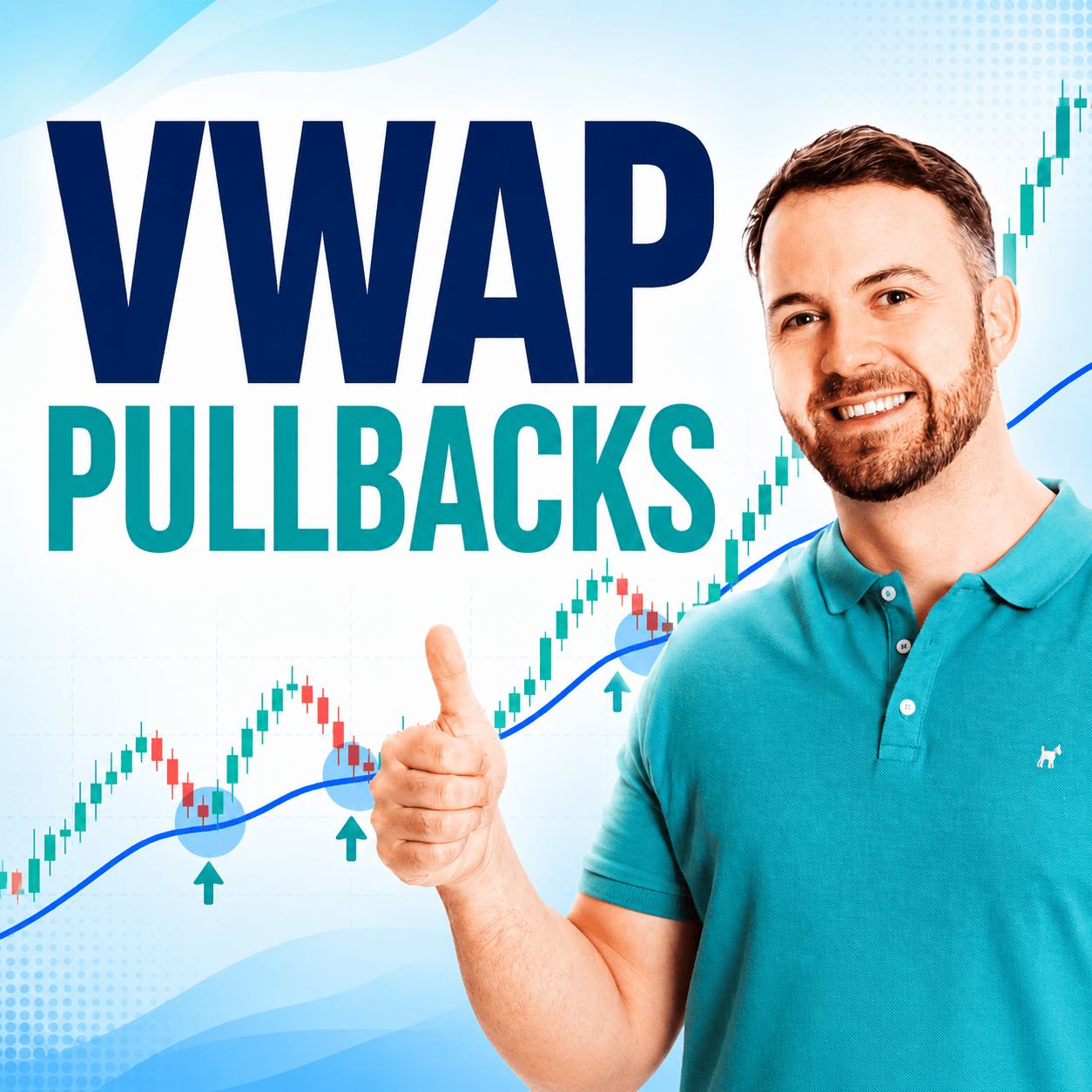
How to trade pullbacks with Anchored VWAP. That’s what this video is all about. I’ll show you my Swing Point VWAP Strategy, which is ideal for trending markets. The goal is simple: don’t chase the move. Wait for the pullback, get a better entry, and trade with the trend.
So, let’s get to the chart. What this setup is all about is that you look at the chart and you want to identify the most important or prominent swing point on that chart. A swing point that every trader who is trading the same chart as you sees as well. All right. In this example, that would be this swing point, right? It’s the most prominent place on the chart. So, you anchor the VWAP there. You anchor it to the candle that formed the high. That would be this candle. This formed the high of that swing point. So, you anchor the VWAP there and then you wait for pullbacks.
Here is the first pullback, and that means that you go short from there because the price was below the VWAP, and when it hit the VWAP, you go short from there. The reason the price is reacting there is because of what the VWAP represents. It is the fair price or the average price since this place, since this important swing point. Right? So, that’s what the VWAP represents: a fair price.
The reason why there is a reaction is that sellers want to sell here for a fair price. They don’t want to sell, for example, from here because they would be selling too cheap. They want to sell for a fair price. And this is not just people trading. Those are algorithms or big trading institutions. By the way, VWAP or Anchored VWAP is one of the most used indicators that algos or big trading institutions use.
Anyway, all those institutions, all those traders, and all those algorithms want to sell for a fair price, which is represented by VWAP. That’s why the price reacts here. Right? So, that’s why you go short from there, from the place where the price hits the VWAP. Then again, another opportunity is to go short from this place. Then another pullback is in here. So, another opportunity for a short, and then another short is in here.
All those reactions are triggered by the VWAP and sellers who want to sell for this fair price or for the average price. It is the fair price since this very important place that most traders on this chart base their trading decisions around. Right? That’s the logic behind it. That’s why this works.
Now, here’s another example. Take a look at this chart. Right here, this is the most prominent swing point. Right? Because this is basically where the downtrend ended and the uptrend started. So, this is the most important place, the most important swing point on this chart. Everybody who is trading this chart, this instrument, and this time frame sees that, and they base their trading decisions around that. Right?
So, you anchor the VWAP there, to that candle that formed the low. That would be this candle. You anchor the VWAP there and then you trade pullbacks. Since the price went up from this point, you wait for this pullback and go long from there. Right? Another long trade opportunity would be in here. Long from this place and then long from this place.
What the institutions or the algos want to do here is they want to buy for a fair price. Right? The price is moving up, but they don’t want to buy, for example, in here. That would be too expensive. It’s not a fair price. At this point, it was not a fair price because the fair price was represented by VWAP. Right? So, they wanted to buy for a fair price. That means from this place. Right?
Again, the next place where the price hits the VWAP, or in other words, the fair or average price, is in here. So, this is where more of the buying orders get triggered, and those guys go long. And so should you, because you should trade along with the big guys who move and manipulate the market. Right? Don’t try to go against them. You want to trade with them.
Now, this is the last example of the swing point anchor. In this case, again, you can see that there is a very prominent low, which is where a downtrend turned into an uptrend. So, what you do is you anchor the VWAP to the candle that formed the low. That’s this candle. You anchor the VWAP there and then you wait for the pullbacks.
The price went up, so this is where you go long. From this place, another long, and another long. Right? Every time the price hits the VWAP, there is an opportunity for you to go long because chances are that the price will react there. All right.
