
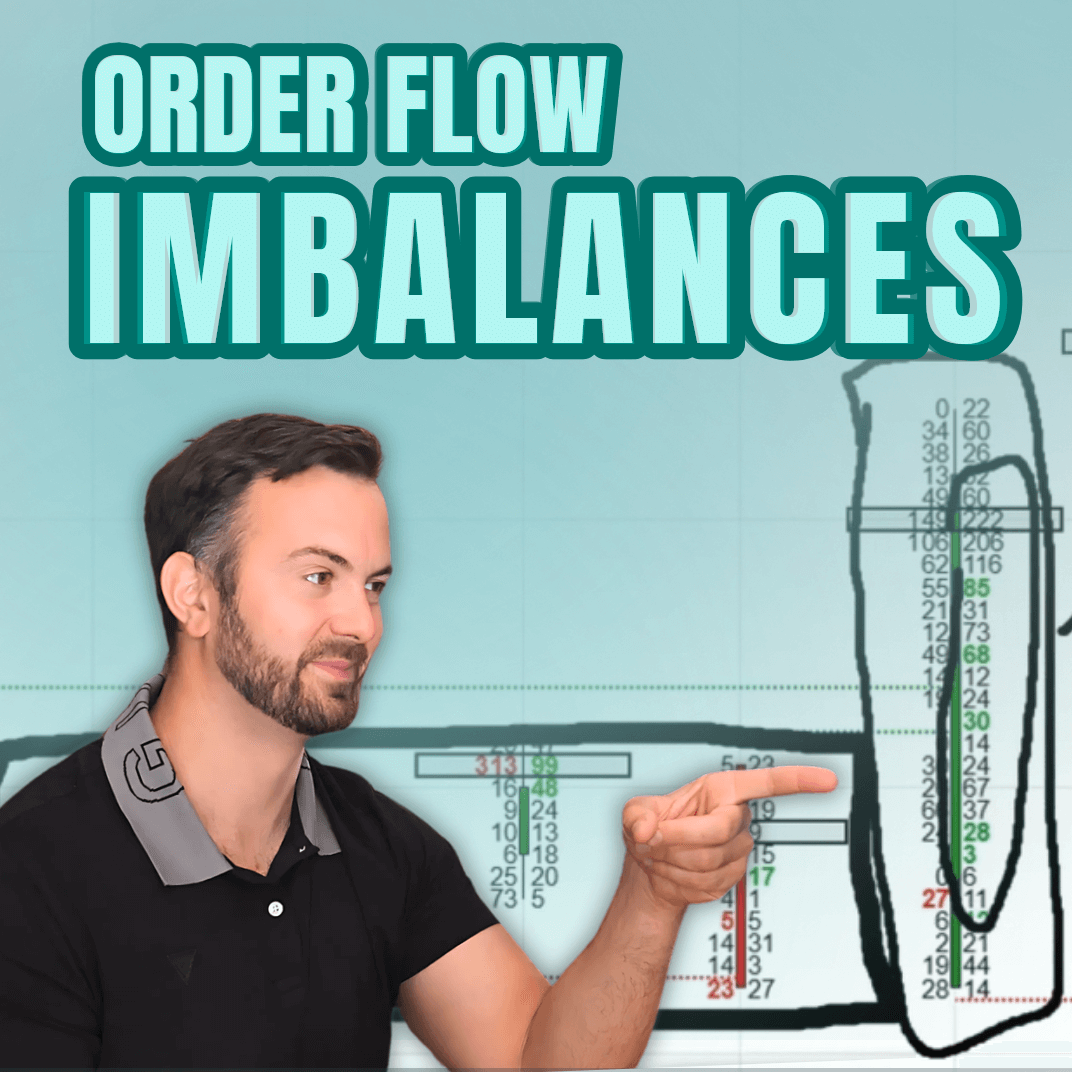
Do you want ME to help YOU with your trading?
Video Transcript:
Hello everyone, it’s Dale here. This
video is going to be about Order Flow imbalances. I’ll show you a couple of
cool tricks and setups on how you can use the imbalances. I’ll show you how to
spot aggressive buyers and aggressive sellers entering the market. I’ll show
you how to spot strong support and resistance zones using Order Flow imbalances
and also a cool breakout strategy using Order Flow imbalances. So, let’s get to
it.
All right. So, what you see here…
those are two footprints, this one and this one. The left side of the footprint
is called bid, that’s this side. The right side of the footprint is ask, and
that’s this side. Now, my software highlights the imbalances. It is green for
buying imbalance and red for selling imbalance. When you see a buying
imbalance, then it means aggressive buyers. When you see a selling imbalance,
then it means aggressive sellers.
Now, if you look at the footprint,
you always compare those two numbers. You compare the volumes diagonally,
right? This is how you read a footprint properly. Now, this is important. If
you compare this number and this number let me highlight that, this one and
this one the reason those 17 contracts are highlighted is because 17 is four
times or more bigger than zero. Right? You compare those two numbers, and if
this one is four times or more bigger, then it is an imbalance. It shows
aggressivity. In this case, aggressive buyers.
If you look at the other footprint
again, you compare diagonally, right? The reason those 18 contracts are
highlighted is because 18 is four times or more bigger than zero. In here, 25
compared to 1 is also four times or more bigger. And 15 is also four times or
more bigger than 2. Right? That’s why this is highlighted. That’s why those are
imbalances. And imbalances are showing us aggressivity. So, on those levels
sellers were way more aggressive than buyers. If you look at the first
footprint, then at this level buyers were way more aggressive than sellers.
This is what imbalances are telling us.
Now, let me tell you what can cause
an imbalance to occur. There could either be a big order being executed on one
level or across more levels. So, this could be one big order being executed
across multiple levels. That’s one way an imbalance can form. Another way could
be more traders coming in to trade at the same time. Imagine, for example,
strong macro news or another strong impulse and everybody wants to enter a
short trade. More traders are coming in, they are selling, and the footprint
chart is showing selling imbalances.
Also, it could be stops getting
triggered. Imagine that there are some buyers who went long from here but then
the market starts to move downward and those buyers are quitting their
positions. When you are long and you want to quit your trade, you do so with
market sell. So that’s a stop getting triggered. And if the price shoots past
the stop-loss orders like this, then it could seem like aggressive selling even
though it could just be stop-loss orders getting triggered.
But no matter the reason whether it’s
this reason, this reason, or this reason what’s important is that imbalance
always means one side, either buyers or sellers, is currently dominating. So
again, if you look at this example, then at this level sellers are dominating.
The same goes for this level. The same goes for this level. Those levels were
levels where sellers were way more aggressive than buyers. They were
dominating, and that’s important. That’s something you want to remember.
Now, before I start talking about
setups and about how to trade the imbalances, let me just show you a couple of
things so we are on the same page.
When you want to trade imbalances and
the setups I’m going to show you, you need to use bid and ask data. That means
ideally currency futures, indices, commodity futures, or stocks. Simply put,
everything that has bid/ask data. Unfortunately, if you want to trade forex,
you can’t do that. You can’t trade forex because forex doesn’t give you true
bid and ask data. But if you want to trade currencies, then you can obviously
trade the currency futures, right? But not forex.
Regarding the time frame, this is for
intraday trading intraday trading and scalp trading, real quick in-and-out
trades. That’s where the imbalances really shine. So, the preferred time frame
that I use is a five-minute time frame, but you can go for lower time frames
like one minute, or you can also use different charts, like volumetric charts
or whatever. The point is that this is for intraday traders or scalp traders
using fast time frames.
Now, the platform where I do my
analysis is NinjaTrader 8. You don’t really need to pay for their full version.
The free version they offer is completely fine. I’m using the free version as
well, so yeah, there are no costs as far as the platform is concerned.
The software I’m using is my own
custom-made Order Flow software, but I’m not forcing you to use my software
even though I think it’s really good. You can use whatever Order Flow software
you like. The only thing that you really need this software to do is highlight
imbalances, but most good Order Flow software will do that for you.
Regarding the broker, since this is
intraday trading and you need to be fast in and out, the broker needs to have
tight spreads, quick execution, and low commissions. I’ve been personally
trading with IC Markets for years, and I’ve been happy with them. So, I can
only recommend this broker.
All right, that’s for that. Let’s now
talk about the setups, shall we?
The first setup is about aggressive
buyers and aggressive sellers, and we spot those guys using imbalances. What
you see on the screen now is a perfect example. This is straight from
yesterday. It was a trade on the EUR/USD futures. The first thing I want you to
look at is this chart. This is a price action chart with a volume profile. In
here, there was a heavy volume zone followed by a strong sell-off. This is a
scenario that I like to trade. I wait for a pullback and go short from the
beginning of the heavy volume zone. So, I wanted to go short from this place.
Now, look at this chart. This is a
five-minute footprint chart. And right here this was the level. The price went
upwards, hit that level, and what occurred here were those imbalances. And if
you remember, I was saying that imbalances show aggressive buyers or aggressive
sellers. If they are marked in red, that means aggressive sellers. Those
aggressive sellers showed up right after the short level got hit. This is
beautiful confirmation of the big guys jumping in as the level got hit. And
this is the confirmation that made me enter the short trade.
So, you can use the imbalance, for
example, like this: when the price hits a level and it doesn’t need to be a
Volume Profile level it could be previous day’s high or VWAP or anything you
like to trade. If price hits your support or resistance level and then you see
aggressivity at that level or close to the level, then it is a signal that the
level is most likely going to work. At the level we saw the aggressivity. That
was a clear signal to jump in the trade. So, at the close of this five-minute
footprint I went short. This is trading the aggressivity.
Let me show you another example. You
see a five-minute footprint chart, and first there was a strong rejection of
higher prices. If you look at the volume profile on the left, then there is a
significant volume cluster formed within the rejection. That’s a setup that I
like to trade, the resistance being basically this zone. Now, when the price
made a pullback to that resistance, first there was a pin bar and then
aggressive sellers started to jump in. Those aggressive sellers those
imbalances are a signal that somebody big is reacting to that level
aggressively. Sellers are jumping in, or one big seller. This is a confirmation
for you to jump in that trade and go short. You wait for the close of this
candle, of this footprint, and then it is short from here. You are reacting to
the aggressive sellers that show up at your level.
Now one more example of this. This is
a long trade scenario. There was this rejection of lower prices and this daily
low formed here. When the price made that daily low, what happened? If you look
at this footprint this one so many buying imbalances. Buyers jumping in.
Aggressive buyers. There’s even a stacked buying imbalance here. This one. This
is telling you buyers are active. Buyers really want to jump in no matter what
and push the price upward. So this is a clear signal of aggressive buyers
jumping in and also a signal for you to jump in as well and participate in this
uptrend. That’s aggressive buyers and aggressive sellers, and imbalance is
really the ideal way to track those guys.
Now another thing I’d like to show
you is stacked imbalances. A stacked imbalance is when you have an imbalance
but more of them are stacked on top of each other. For example, in here we have
three buying imbalances. My software is set to show this highlighted zone at
the places where three or more imbalances are stacked. So, if it’s three or
more stacked, then it is a stacked imbalance. My software draws this rectangle
there, and that means that this is a support. Price makes a little pullback to
it, and you go long from there.
Now, there’s one more example on this
chart. Those imbalances those are stacked imbalances. The software highlights
that in green. You wait for a pullback. The price goes into that stacked
imbalance zone, and either from the top or from the middle of the zone you go
long. This is how you trade stacked imbalances.
The ideal case is, for example, when
there is a trend and there is a stacked imbalance and a quick pullback to it a
very quick pullback. The quicker the better. You enter the trade at the
imbalance zone, enter the long, and participate in that uptrend with a tight
stop-loss just behind the imbalance zone and risk-reward bigger than two. So,
if you enter here, then the take-profit should be at least here so you can gain
twice the amount of money you risked. This is the ideal scenario when you’re
trading those imbalances. General rule: tight stop-loss, usually behind the
stacked imbalance or behind the low of a candle, but just a couple of points.
And risk-reward should always be positive. Since we are trading with such a
tight stop-loss, you want to aim for risk-reward bigger than two.
Let me show you another example of
stacked imbalances. In this case, this is a short trade scenario. There’s a
downtrend, and within that downtrend we have those stacked imbalances here.
One, two, three stacked on top of each other. The software draws this reddish
rectangle. There’s a pullback to it and a short from there. And by the way,
there was a nice confirmation: this selling imbalance aggressive sellers right
in the middle of that stacked imbalance. So that’s a little confirmation to go
short.
Now one more example of this. We have
a pretty big stacked imbalance in here. One, two, three, four, five, six
imbalances stacked on top of each other. That’s a pretty solid imbalance. The
price makes a pullback to that zone and you go short from there.
Now what I’m going to show you is my
favorite strategy. It is a breakout strategy, and it is a strategy based on
imbalances. It’s very simple. I’m pretty sure you guys will love it. It goes
like this. First, you need to see a rotation. And by the way, we are still on
the five-minute chart, five-minute footprint chart. You need to see a rotation,
something like this. Footprints overlap each other. That’s a rotation it’s
going nowhere. But then you see a breakout. This is the breakout.
How do you tell this is not going to
be a false breakout? You tell because you see those imbalances here. And what
do the imbalances tell you? They tell you that there are aggressive buyers
here. So it’s not likely to be a false breakout because aggressive buyers are
jumping in, and they’re likely to follow this through and push the price
upward. When you see a breakout with imbalances and it doesn’t need to be as
many as here but when you see a breakout with imbalances, it is a sign that
this is not a false breakout but a true breakout, and the price will continue
in the direction of the breakout.
Now looking at this picture here,
there’s also one smaller rotation in here, followed by a breakout where many
buying imbalances are right here on the ask side of that footprint. So this is
a clear sign of buyers jumping in, and you should join them. You should go long
as well.
Now let me show you a couple more
examples of the breakout strategy. What you see here in this example: we have
this nice and tight rotation, which is followed by this footprint. This is a
breakout. And the way to tell if this is a true breakout or a false breakout is
to look whether there are selling imbalances whether the sellers really mean
it. Looking at this, I can tell they really do mean it. We see selling
imbalances here right after the breakout occurred. That’s a beautiful signal to
join those guys right away. You can wait for the candle to close and then go
short from there. The stop-loss doesn’t really need to be too wide. You can
place it behind this heavy volume zone, which is just a couple of ticks, which
is completely fine, allowing you to trade with a positive risk-reward ratio. In
this case, even if you are trading with risk-reward ratio 2, this would be a
winning trade.
Now another example of the breakout
strategy. Again, in here we have a rotation tight rotation where the footprints
overlap. That’s how we can tell it’s a rotation. From this zone there’s this
breakout, and as you can see, beautiful imbalances. This is telling you the
sellers mean it, that this is not a false breakout, and this is telling you
that you should join them. So wait for the candle to close and go short from
there.
