

Many traders fail to achieve consistency because they fall into the same traps over and over again. In this article, we will break down the most common Volume Profile mistakes that are holding you back and, more importantly, I’ll show you the exact steps to fix them and trade with confidence
Many traders believe that simply dragging a Volume Profile tool across their charts is enough to find winning trades. However, the reality of institutional trading is far more nuanced. In this comprehensive guide, I draw on my years of professional trading experience to reveal the three most frequent mistakes that even seasoned traders make. We will dive deep into the mechanics of Point of Control (POC), the critical differences between market phases, and why the “first test” rule is the most important filter for your entries. Whether you are a NinjaTrader 8 user or trade on other platforms, these insights will fundamentally change how you view market liquidity.
Table of Contents
Quick Summary: Key Lessons from this Article
The “Edge” Entry: Don’t wait for the POC; enter at the beginning of a heavy volume zone to ensure you get filled before the smart money moves the price.
Context is King: D-shaped profiles (rotations) require “edge-to-edge” trading, while trending profiles require “pullback-to-cluster” trading.
The One-Touch Rule: The highest probability of success is always on the first test. Second tests are high-risk “spent” levels.
Avoid the “Universal Strategy” Myth: Adjust your indicators and mindset based on whether the market is moving sideways or in a clear direction.
Volume + Price Action: Use Volume Profile to find the ‘Where’, but use Price Action to confirm the ‘How’.
Why you should care about Volume Profile mistakes
Volume Profile is not just another indicator like the RSI or MACD. It is a representation of market auction theory. It shows us where big institutions—the “Smart Money”—are placing their orders. The biggest mistake is treating a volume cluster as a simple line on a chart. It is a zone of interest. If you treat it too rigidly, the market will punish you by either missing your entry or hitting your stop loss because you entered at the wrong part of the cluster.
Volume Profile Mistake #1: Trading every POC
The Point of Control (POC) is the price level where the highest volume was traded within a specific time period. Naturally, retail traders think: “This is where the most action is, so I should put my limit order exactly on this line.”
The Problem with “Exact” POC Entries
Through years of analyzing thousands of trades in my journal, I noticed a recurring pattern: The price often turns 2–5 pips before reaching the POC. Why? Because other professional traders also see that level. They start entering their positions slightly ahead of the POC to ensure their orders are filled. This is called “front-running” the level.
The Solution: Trading the “Edge” of the Cluster
Instead of aiming for the center of the heavy volume zone (the POC), look for the beginning of the cluster.
The Logic: This is where the institutional activity starts to become significant.
The Benefit: You will drastically reduce the number of “missed trades” where the price reacts perfectly to your zone but never hits your exact limit order.
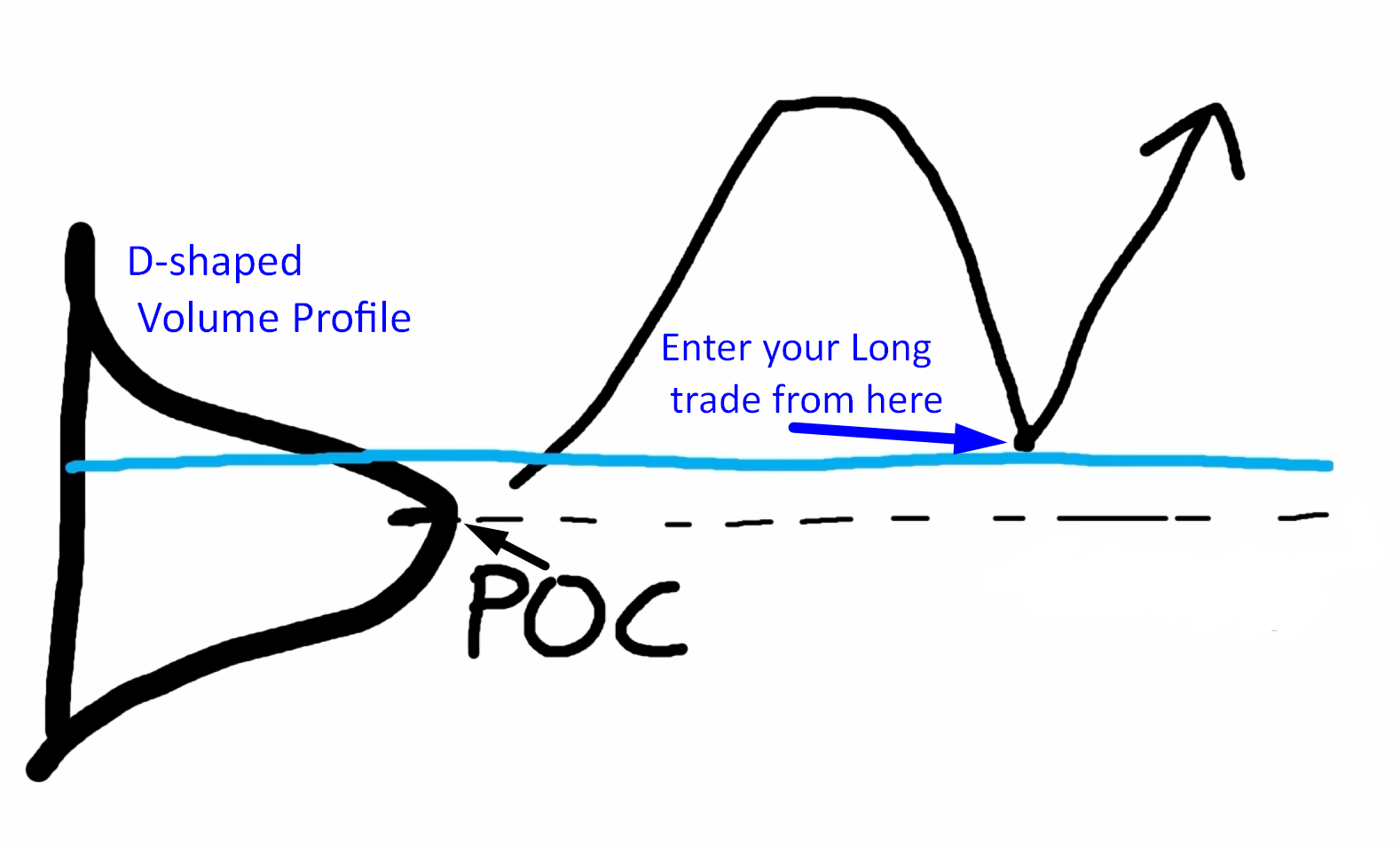
This is a classic Volume Profile mistake that occurs when you ignore the surrounding price action
Volume Profile Mistake #2: Ignoring Market Context
A hammer is a great tool, but you don’t use it to turn a screw. Similarly, Volume Profile must be applied differently depending on the market regime.
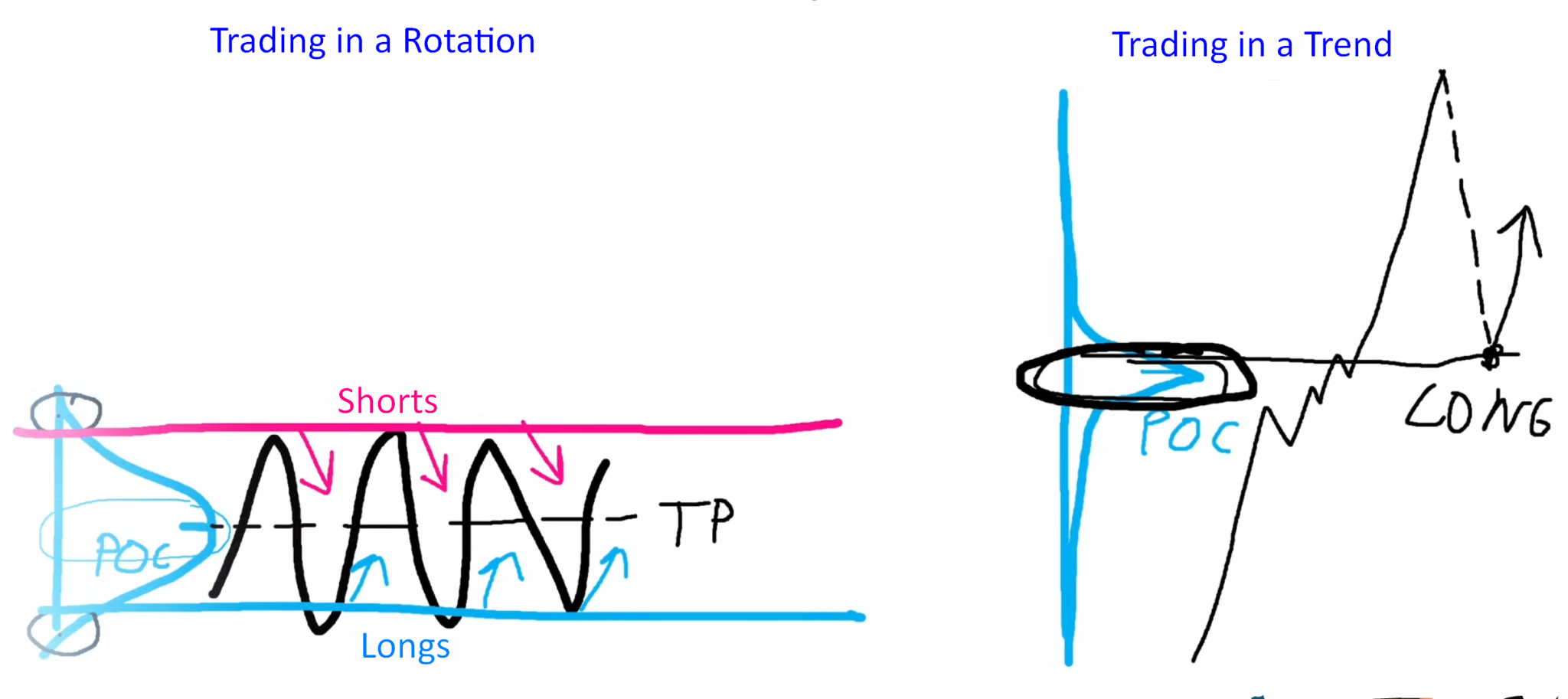
1. Rotating Markets (The D-Shaped Profile)
When the market is moving sideways, it creates a balanced profile that looks like the letter “D”. In this environment, the POC is in the middle.
The Common Mistake: Traders try to go long or short at the POC.
The Reality: In a rotation, the price “gravitates” toward the POC. It doesn’t bounce off it; it cuts through it.
The Correct Approach: Trade the rejections of the edges. Look for small volume “bumps” at the top and bottom of the D-shape. Use the POC only as your Take Profit target.
2. Trending Markets (Support and Resistance)
When the market is in a clear uptrend or downtrend, it creates volume clusters along the way. These are areas where the trend “paused” to accumulate more positions.
The Strategy: In a trend, these clusters act as massive support or resistance.
The Execution: Wait for a pullback to the cluster’s edge and trade in the direction of the original trend.
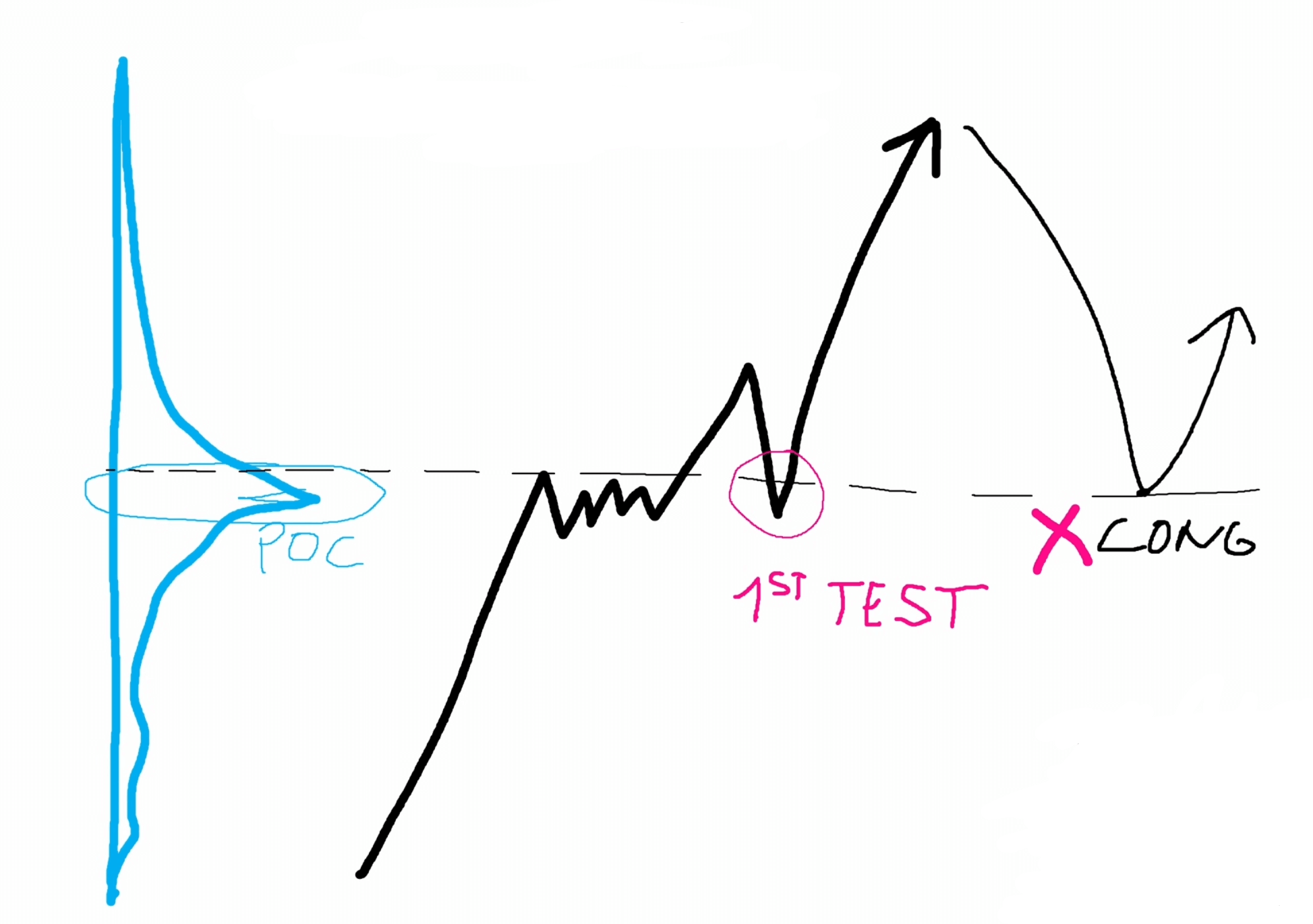
Mistake #3: The "Spent Level" Error – Trading Tested Zones
This is the most critical mistake for your win rate. A volume level is not a permanent wall; it is a pool of liquidity. Once the price has visited that pool, the liquidity is often “consumed.”
The “First Test” Rule
The first time the price returns to a heavy volume zone, the probability of a reaction is at its highest. This is because the institutions who missed the initial move are now getting their orders filled.
What counts as a test? Even a small “wick” of a candle that touches the edge of your zone counts as a test.
Why avoid Second Tests? By the second or third time the price reaches a level, the big players have already executed their trades. The level becomes “weak,” and the price is much more likely to blast right through it.
Rule of Thumb: “Fresh levels provide the best reactions. Once it’s touched, move on to the next setup.”
Practical Application: USD/JPY Trade Example
Let’s look at a trade I took recently on the USD/JPY 30-minute chart using NinjaTrader 8. There was a clear heavy volume zone formed during the London session. While the POC was sitting deeper in the zone, I placed my buy limit at 158.17, which was the very beginning of the cluster.
The result? The price dipped exactly to my level, touched it for less than a minute, and skyrocketed. If I had waited for the local POC, I would have missed a “beautiful winner” and felt the frustration every trader knows. This trade perfectly illustrates why the “Edge Entry” and “Market Trend” rules are non-negotiable.
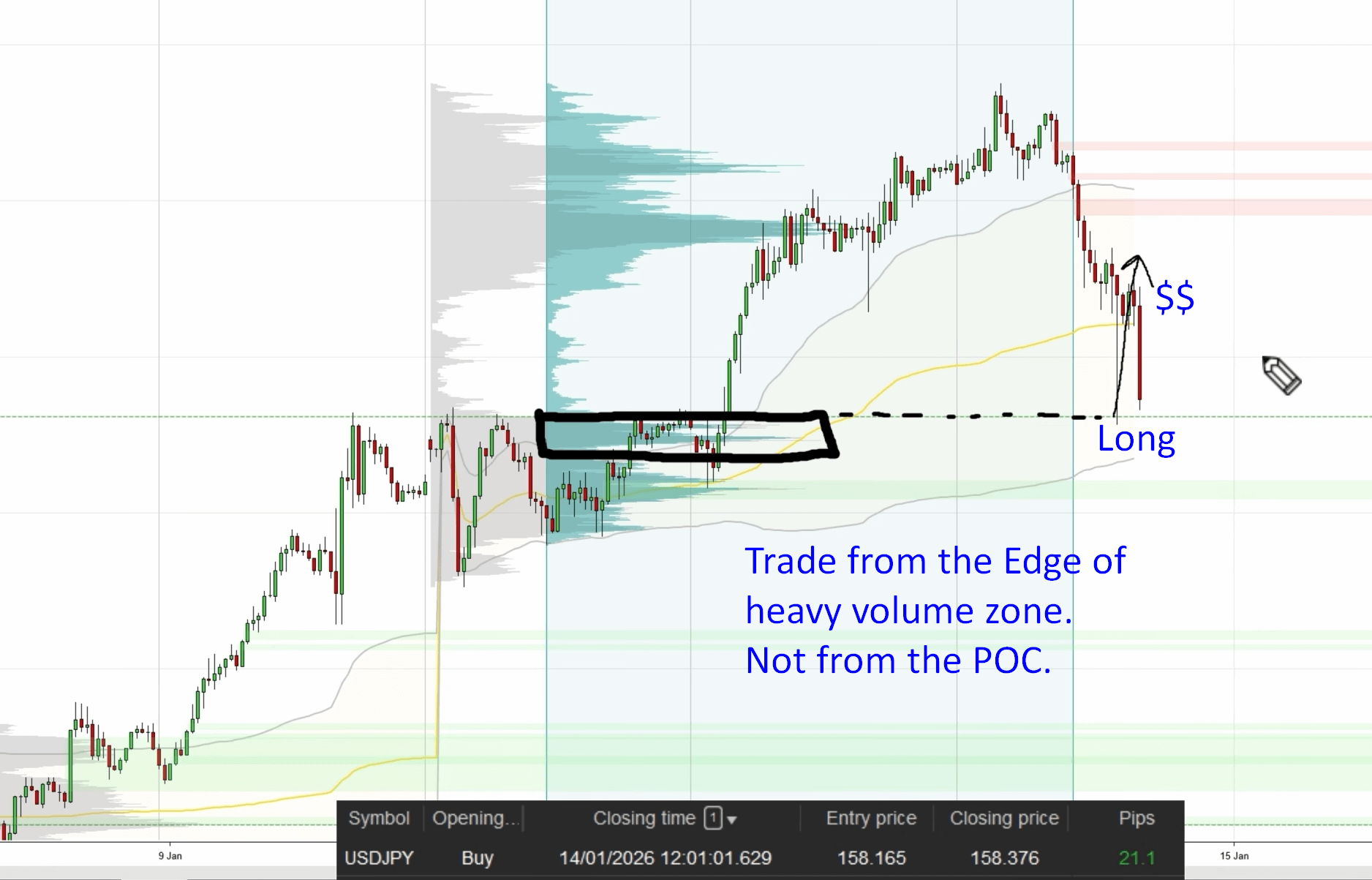
In this USD/JPY trade, I managed to avoid typical Volume Profile mistakes by moving the trade entry to the edge of heavy volume zone.
By understanding these Volume Profile mistakes, you are already ahead of 90% of retail traders.
FAQ: Expert Answers to Your Volume Profile Questions
1. How do I know if a market is rotating or trending? Look at the previous 24-48 hours. If the price is making new highs/lows, it’s a trend. If it’s bouncing between a set range, it’s a rotation. Always look at the Shape of the Profile (D-shape vs. P-shape or b-shape).
2. Does Volume Profile work on crypto and stocks? Absolutely. Volume is the universal language of all markets. Whether you trade Bitcoin, Apple stocks, or Forex, the logic of “Smart Money” accumulation remains the same.
3. What is the best timeframe for these setups? I find the 30-minute chart to be the “sweet spot” for day trading. It filters out the noise of the 1-minute chart but provides more opportunities than a daily chart.
Master the Markets with Trader Dale
Trading with Volume Profile is a journey toward understanding the true intent of market participants. If you are ready to stop guessing and start trading with institutional logic, explore my Volume Profile Pack, Order Flow Pack, VWAP Pack, or Smart Money Pack.
My custom-made indicators for NinjaTrader 8 and detailed video training will give you the “unfair advantage” you need in today’s markets.
