
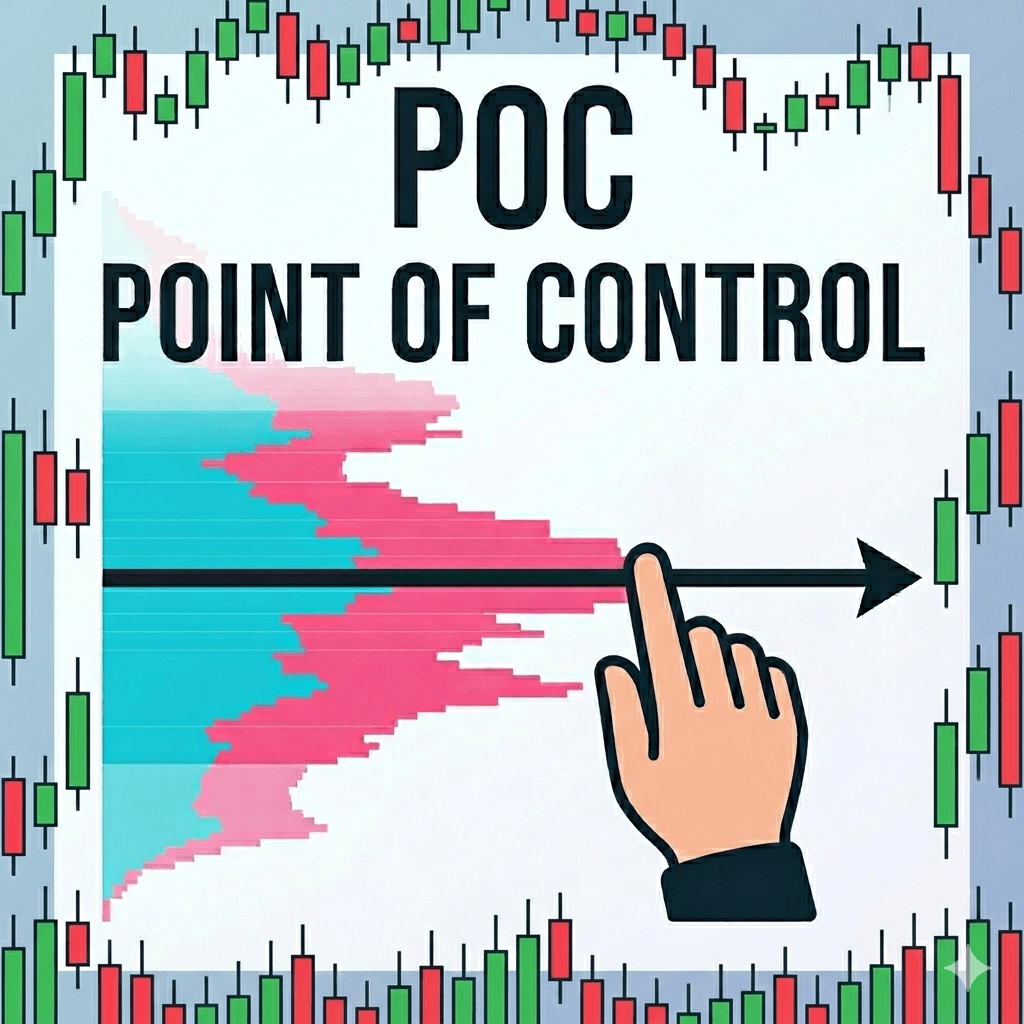
When you first start trading, the price charts can look like a chaotic mess of red and green bars moving up and down without any rhyme or reason. You might try to use various indicators that look back at past prices, but they often feel late to the party. In this article, I draw on my years of experience in technical analysis to show you why understanding the “where” is much more important than the “when.” Learning how to trade using Volume Profile and POC is the closest thing a trader has to a roadmap. Instead of guessing where the market might turn, you will learn to see the exact price levels where the world’s largest banks and institutions have placed their biggest bets.
The Volume Profile is a unique tool because it doesn’t care about time; it only cares about where the money was spent. By identifying the Point of Control (POC)—the single most important price level in any given day—you can predict with high accuracy where the market will find support or resistance. This guide is designed to take you from a complete beginner to someone who can confidently set up a chart, identify a high-probability trade, and manage risk like a professional. We will avoid the confusing jargon and focus on a simple, repeatable strategy that you can start using today. Whether you are trading Forex, Stocks, or Crypto, the principles of volume remain the same because they are based on the core laws of supply and demand. In the following sections, we will break down the technical setup, the psychology of the “big players,” and the step-by-step execution rules you need to stay consistent.
Table of Contents
5 Key Takeaways
Volume Profile shows where the most trading activity happened at specific price levels.
The Point of Control (POC) is the strongest level where the highest volume was traded.
The Strategy: Wait for price to move away from the POC, then trade the first pullback to that level.
Risk Management: Use a 1:1 risk-to-reward ratio based on daily volatility (e.g., 12 pips for EUR/USD).
Avoid News: Never trade during high-impact economic releases to protect your capital.
What is Volume Profile and Why Does it Matter?
Understanding Price vs. Time Indicators
Most traders use traditional indicators that look at time, like moving averages or RSI. However, the Volume Profile is different because it focuses on price levels. Instead of telling you when something happened, it tells you where the big players were active. When you understand how to trade using Volume Profile and POC, you stop guessing where support and resistance might be and start seeing where they actually are. Imagine a horizontal bar chart on your screen; the longer the bar, the more trading happened at that specific price. This gives you a vertical view of the market’s conviction at every single price point.
Defining the Point of Control (POC)
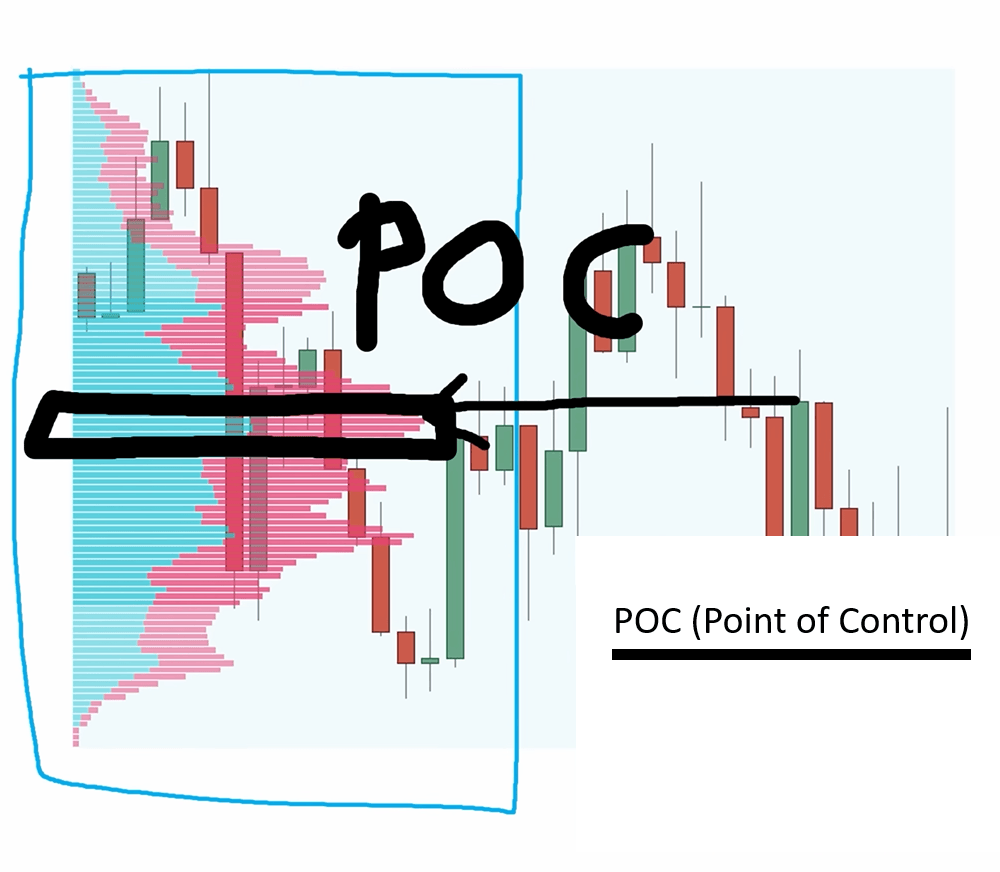
The most critical part of this indicator is the Point of Control (POC). This is the price level where the maximum amount of volume was traded during a specific period (usually a day). Think of the POC as a “fair price” where both buyers and sellers agreed to do the most business. Because so much money changed hands here, the market “remembers” this level. When the price returns to the POC later, it often acts like a magnet or a wall. It is one of the most reliable ways to find “hidden” support and resistance levels that standard trendlines might miss because it is based on actual money spent, not just a visual connection of peaks and valleys.
Aligning with Institutional Traders
By focusing on the POC, you are following the footprints of institutional traders. Large banks and hedge funds don’t enter the market all at once; they leave traces in the volume. Using this tool allows you to align your trades with these “big fish.” If you are tired of getting stopped out by random market movements, learning to identify these heavy volume zones is the first step toward a more grounded and logical trading approach. It turns the “chaos” of the candles into a structured map of human behavior and institutional intent, making your trading decisions much more objective.
How to Set Up Volume Profile on TradingView
Adding the Session Volume HD Indicator
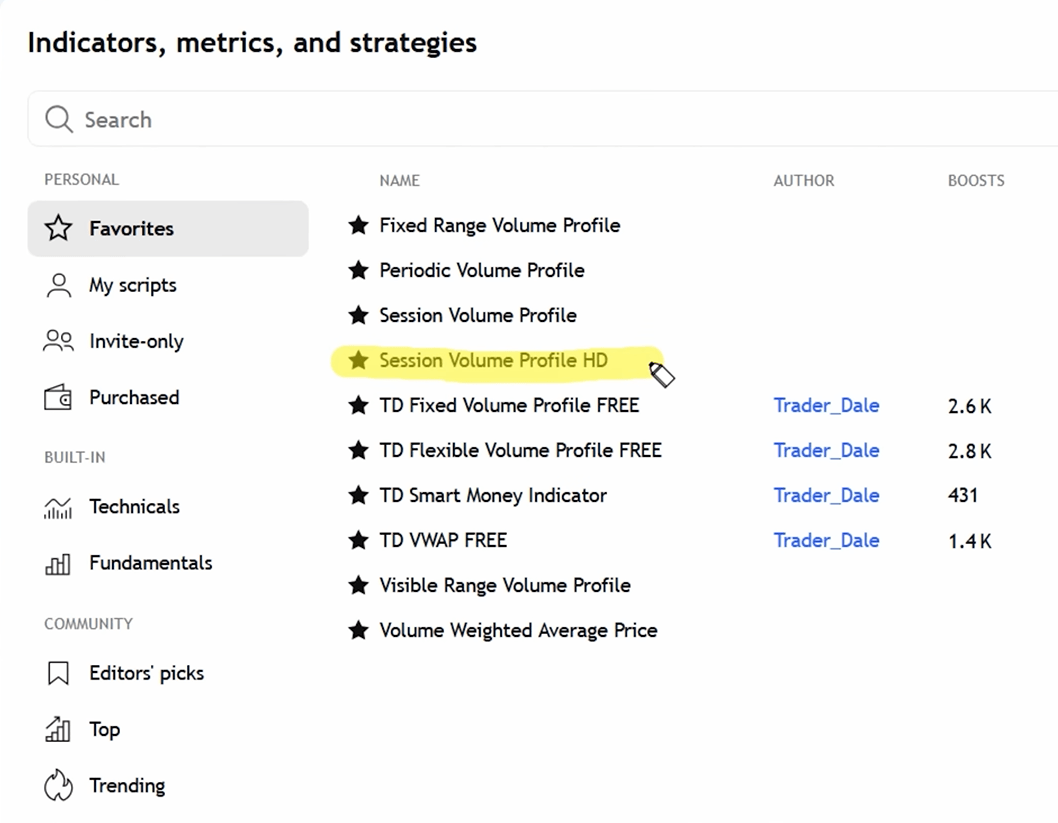
Setting up your tools correctly is half the battle. To learn how to trade using Volume Profile and POC, you don’t need expensive software; TradingView has everything you need built-in. First, open your chart and click on the “Indicators” tab at the top. Search for “Session Volume HD.” This version is excellent because it automatically adjusts the detail of the volume bars based on how much you zoom in or out, making it very beginner-friendly. Once you add it, your chart might look a bit messy, so we need to tweak the settings for clarity and ensure we are looking at the right data.
Extending the POC for Better Visibility
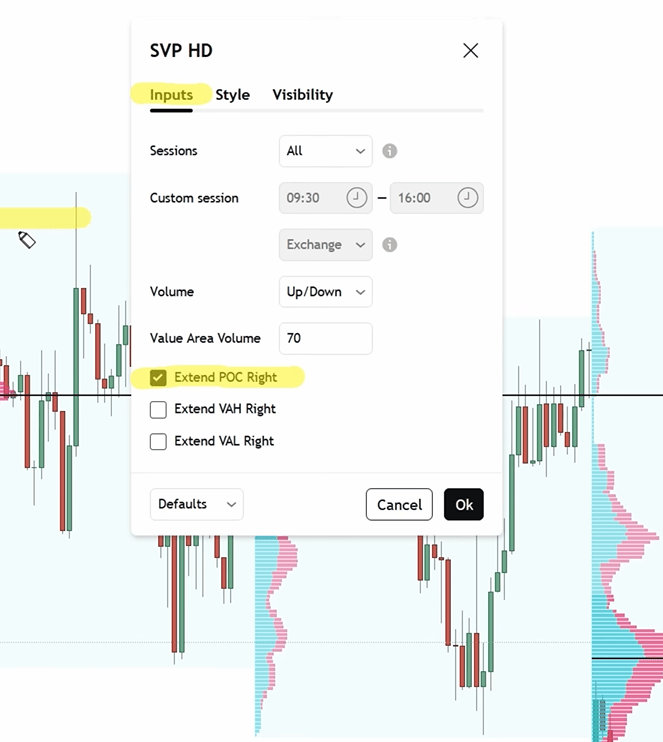
Go into the indicator settings and look for the “Inputs” tab. The most important box to check is “Extend Point of Control to the Right.” Why do we do this? Because it draws a line from the POC of the previous day into the current day. This line stays on your screen until the price finally touches it. It acts as a visual “alarm” telling you exactly where your entry point is. If the line is still there, the level is “untested” and ready to be traded. If the line has stopped, the level has already been hit, and you should look for the next setup. This simple setting prevents you from making the common mistake of trading “old” levels.
Customizing the Visual Style
Next, go to the “Style” tab. I recommend making the Point of Control line a distinct color, like black or bright orange, and increasing its thickness. You want to be able to see it at a glance. You can also lower the transparency of the other volume bars so they don’t distract you from the price candles. By simplifying your visual environment, you reduce “analysis paralysis.” You aren’t looking at fifty different signals; you are looking for one specific line and how the price interacts with it. This clean setup is exactly what a professional-grade workspace looks like, allowing you to focus on execution rather than interpretation.
| Setting Name | Recommended Action | Reason |
| Indicator | Session Volume HD | Best visibility and automatic scaling. |
| Extend POC | Enabled (Right) | Shows you exactly where the level gets tested. |
| POC Color | High Contrast (e.g., Black) | Makes the most important level stand out. |
| Value Area | Optional | Can be hidden to keep the chart clean for beginners. |

The Step-by-Step Volume Profile Trading Strategy
1) The Three Phases of a Trade
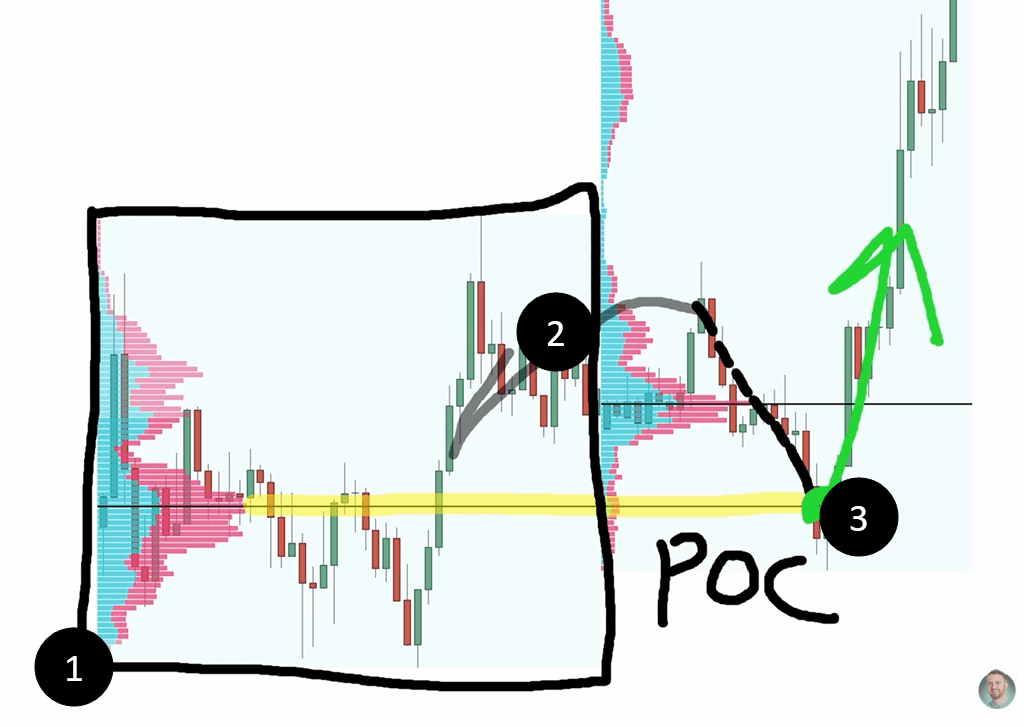
Now that your chart is ready, let’s talk about the actual “how-to.” To trade using Volume Profile and POC effectively, you must be patient. The strategy is divided into three clear phases: the formation, the move away, and the pullback. For a Long Trade, you first wait for a full day of trading to finish so the daily Volume Profile is fully formed. You identify the POC of that day. Then, you wait for the price to move significantly higher, away from that POC. This shows that buyers are in control and are willing to push the price up from that “fair value” zone.
2) Executing the First Test Entry
The “magic” happens when the price eventually falls back down to that old POC. When the price touches the POC from above, that is your signal to enter a Long (Buy) position. We only trade the first test. This means if the price hits the level, bounces, and then comes back a second or third time, we ignore it. The first test has the highest probability of success because the “pent-up” demand at that level is at its strongest. The same logic applies to Short Trades: wait for the price to move below a POC, then sell when it pulls back up to touch it from below. This simple “retest” logic is the core of institutional trading.
3) Maintaining Discipline and Patience
It is important to remember that we aren’t just clicking buttons randomly. We are waiting for a specific pattern to repeat. Many beginners make the mistake of trying to “catch a falling knife” by buying while the price is crashing through several levels. By learning how to trade using Volume Profile and POC, you are buying at a level where you know historical buying power exists. This gives you a statistical edge. You are essentially waiting for the market to return to a “wholesale” price before you jump back in. This discipline is what separates a consistent trader from a gambler. You aren’t chasing the market; you are letting the market come to you at your price.
Managing Your Trades: Stop-Loss and Take-Profit
The Importance of Exit Strategies
Knowing where to enter is great, but knowing where to exit is how you keep your money. When learning how to trade using Volume Profile and POC, many people get stuck on where to put their Stop-Loss (SL) and Take-Profit (TP). To keep things simple and beginner-friendly, I recommend using a Fixed 1:1 Risk-to-Reward Ratio based on the average daily volatility of the pair you are trading. This means your potential profit is exactly the same size as your potential loss. This approach removes the guesswork and helps you stay disciplined during volatile market moves.
Calculating Targets Based on Volatility
To calculate this, look at the “Average True Range” (ATR) or simply observe how many pips the market moves on average per day. For a pair like EUR/USD, which often moves around 80 pips a day, a safe target is 10-20% of that daily range. This usually equates to a 12-pip Stop-Loss and a 12-pip Take-Profit. By using a 1:1 ratio, you only need to be right more than 50% of the time to be profitable. Because the POC is such a strong level, the “bounce” or “reaction” is often enough to hit a 12-pip target before the level fails, giving you a high win rate.
Sticking to a Mechanical Plan
As you gain more experience, you can start to experiment with larger Take-Profits or moving your stop-loss to breakeven, but for the first few months, stick to the fixed 1:1. This removes the emotional stress of “hoping” for a massive win or fearing a small loss. You have a plan, you have a target, and you let the market do the work. If the price hits your Stop-Loss, don’t sweat it—it’s just a business expense. The goal is to survive long enough to let the high-probability nature of the POC levels work in your favor over a series of 100 trades. Consistency is built on boring, repeatable actions.
The Psychology of Volume: Why Price Reacts to POC
Why Price Levels Work
You might be wondering, “Why does a simple line on a chart make the price move?” The answer isn’t magic; it’s human psychology and institutional behavior. When you trade using Volume Profile and POC, you are exploiting two main groups of people: the “Defenders” and the “Exiters.” First, let’s look at the Defenders. If a large bank bought a massive amount of currency at the POC, they have a “vested interest” in that level. If the price returns to that spot, they will often buy more to prevent the price from going lower and turning their huge position into a loss. They are literally defending their territory.
The Role of "Exiters" in Price Bounces
The second group is the Exiters. Imagine someone who took a “Short” position (selling) at the POC but the price went up against them. They are now in a losing trade and feeling the heat. When the price finally returns to their entry point (the POC), they feel a huge sense of relief. They can now close their trade at “breakeven” (no profit, no loss). To close a Short trade, they must Buy. This flood of buying from people “getting out” combined with the buying from the “Defenders” creates a surge in price. This is why we see those sharp, sudden bounces at the POC level.
Visualizing Market Struggles
Understanding this “why” helps you stay calm during a trade. You aren’t just looking at a line; you are visualizing the struggle between buyers and sellers. When you learn how to trade using Volume Profile and POC, and the price breaks through a level without any reaction, it tells you something very important: the balance of power has completely shifted. If a level that should have been defended is ignored, it means the other side is incredibly strong. This is valuable information that you can use to follow the new trend, rather than stubbornly fighting against it.
Common Mistakes and How to Avoid Them
The Danger of Over-trading
Even the best strategy can fail if you fall into common traps. One of the biggest mistakes beginners make when learning how to trade using Volume Profile and POC is “Over-trading.” Just because you can trade 20 different currency pairs doesn’t mean you should. Each market has its own “personality” and volatility. I suggest picking 1 to 3 major pairs (like EUR/USD, GBP/USD, or USD/JPY) and becoming an expert in them. It is better to know one market deeply than twenty markets superficially. Mastering the nuances of one pair will lead to much better results than chasing signals everywhere.
Avoiding High-Impact News Events
Another trap is Trading during High-Impact News. Markets become “irrational” when the Federal Reserve releases interest rate news or when jobs reports (like NFP) come out. During these times, the price can blow right through a Point of Control like it isn’t even there because the volume from the news outweighs the historical volume at the level. No matter how strong your Volume Profile level is, it cannot compete with a global economic shock. Always check a site like Forex Factory before you trade. If there is a “Red Folder” news event, stay on the sidelines until the market stabilizes.
Mastering Consistent Risk Management
Finally, stay away from Inconsistent Risking. Some traders risk 1% on one trade and then 5% on the next because they “feel lucky.” This is the fastest way to blow a trading account. To be successful, you must treat your trading like a business. Decide on a fixed percentage (I recommend 2% per trade) and never change it based on your emotions. If you follow your rules, stay away from the news, and manage your risk, you are already ahead of 90% of other retail traders. Success in this field is about surviving the bad days so you can profit from the good ones.
Conclusion: Your Path to Mastering Volume
Summary of Key Lessons
To summarize, mastering the art of how to trade using Volume Profile and POC is about finding where the most significant trading activity occurred and using those levels as your roadmap for future price action. We’ve covered how to set up your charts on TradingView, the exact steps for entering long and short trades, and the psychological reasons why these levels work so consistently. Remember, the market is a reflection of human behavior, and the Volume Profile is the most honest tool we have to track that behavior in real-time. It doesn’t lie because it is based on executed trades.
Embracing the Journey
Success in trading doesn’t come from a “magic” indicator that works 100% of the time. It comes from having a simple, repeatable process and the discipline to follow it even when you have a losing day. Start by practicing this strategy on a demo account or with very small sizes to build your confidence. Keep a journal of your trades, note which POC levels gave the best reactions, and always protect your capital. With time and practice, the Volume Profile will become a natural part of your trading toolkit, giving you the clarity to navigate the markets without the usual stress and confusion.
FAQ: Common Questions About Volume Profile
1. Does this strategy work on all timeframes?
Yes, but it is most reliable on the Daily (Session) Profile. Intraday moves are often noisier, while the daily POC represents the collective agreement of the market for a full 24-hour period. If you are a beginner, start with the daily levels first before moving down to smaller timeframes.
2. What should I do if the price breaks through the POC without reacting?
If the price closes significantly past the POC, it’s a “Failed Level.” However, this is also a signal! Often, price will return to that same level from the other side. This is called a “Reversal Trade.” If it breaks a support POC, that level often becomes a new resistance POC.
3. Can I use this for Stocks or Crypto?
Absolutely. Volume Profile is a “Universal Indicator” because it tracks human activity. Whether it’s Bitcoin, Apple stock, or Gold, the POC works because it shows where the money is. Just ensure the exchange you are using has high-quality volume data.
Ready to take the next step?
If you want to see these levels in action every single day and learn more advanced confluences, visit trader-dale.com. You can join a community of like-minded traders and get access to the professional Volume Profile Pack to speed up your learning journey. Happy trading!
